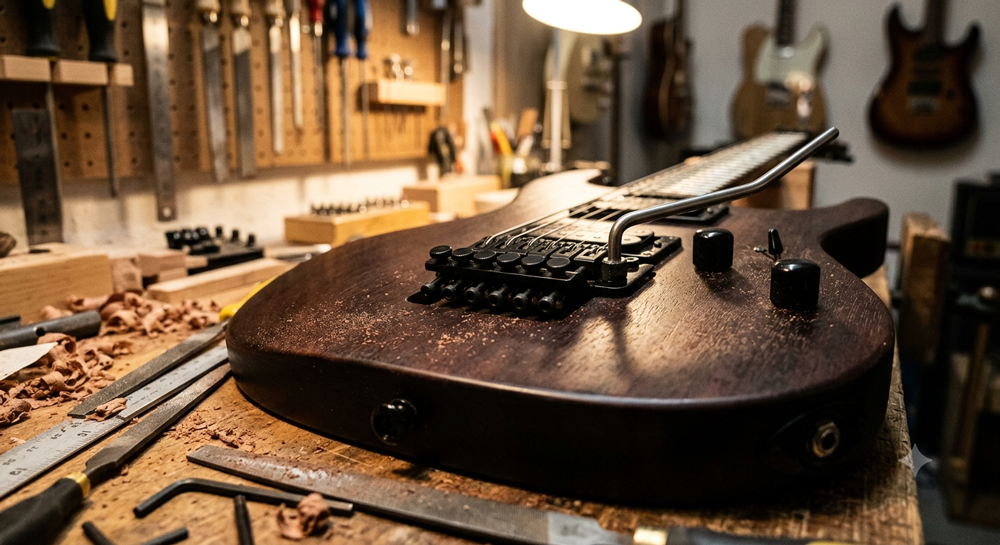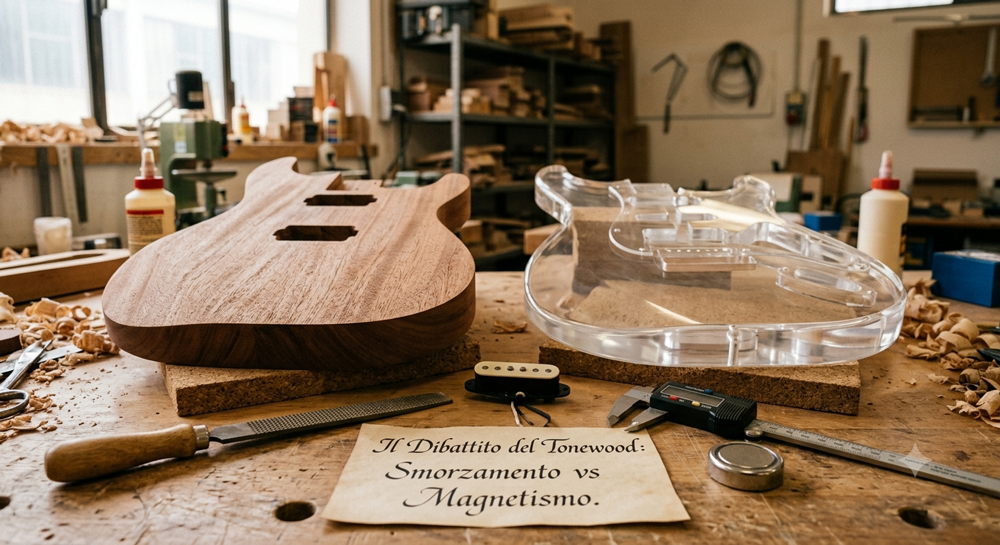


In electric instrument making, the choice of wood is crucial in shaping the sound, appearance, and durability of the instrument. Each type of wood contributes in a unique way to the tonal characteristics, making the combination of materials an essential part of the design of an electric guitar or electric bass. This article explores the most common woods and their acoustic, aesthetic, and functional properties,
The Importance of Wood in Electric Instrument Making
Unlike acoustic instruments, where the hollow body naturally amplifies the vibrations of the strings, in electric guitars and basses, the wood affects resonance and sustain, tone, weight, balance, and aesthetics. All of this, to a greater or lesser extent, determines the wood’s ability to maintain and transmit the vibrations generated by the strings, as well as to emphasize or attenuate frequencies depending on its density and structure. Weight and balance are crucial for comfort during play, and they also determine the instrument’s color and visible grain patterns.
Types of Wood Used in Electric Instrument Making
- Mahogany
Acoustic characteristics: Warm and soft tones.
Excellent sustain, emphasizes the mid-low frequencies.
Uses: Often used for the body and neck, especially on electric guitars such as the Gibson Les Paul and SG.
Appearance: Deep brown tones, often with elegant veining.
Pros: Full-bodied and balanced sound, easy to work with.
Against:
Relatively heavy. - Ash
Acoustic characteristics: Bright, clear tone; excellent sound projection; emphasizes high frequencies without sacrificing the low end.
Uses: Ideal for guitar bodies such as the Fender Telecaster and Stratocaster.
Types of ash:
Swamp Ash: Lightweight and resonant, chosen for high-end instruments.
Hard Ash: Denser, with a more pronounced attack.
Appearance: Distinctive and unique grain patterns, perfect for clear or natural finishes.
Pros: Lightweight (Swamp Ash). Defined and bright tone.
Cons: Not exactly inexpensive - Alder
Acoustic characteristics: Balanced and versatile sound. Good response in the mid-high frequencies.
Use: One of the most used tonewoods by Fender for Stratocaster and Precision Bass bodies.
Appearance: Light and uniform grain, ideal for solid finishes.
Pros: Lightweight and easy to work with. Versatile stamp.
Cons: Less suitable for those looking for deep bass. - Maple
Acoustic characteristics: Bright, crisp tones. High density that enhances sustain.
Uses: Often used for necks, fingerboards, and decorative tops. Maple fingerboards offer a crisp, bright attack.
Types of maple:
Hard maple: Ideal for necks and fingerboards due to its strength.
Flamed or bird’s-eye maple: Chosen for its aesthetic appeal in tops.
Appearance: Captivating grain patterns, often enhanced by high-gloss finishes.
Pros: Spectacular aesthetics. Strength and durability.
Cons: Heavier than other types of wood. - Rosewood
Acoustic characteristics: Warm, harmonic-rich sound. Excellent for emphasizing mid-low frequencies.
Use: Mainly for keyboards, but sometimes for guitar bodies.
Appearance: Dark brown with elegant veining.
Pros: Smooth feel. Harmonious and detailed tone.
Cons: Increasingly rare and expensive due to export restrictions. - Basswood
Acoustic characteristics: Soft, balanced sound. Emphasizes midrange frequencies.
Used for lightweight instruments, such as Ibanez’s mid-range and high-end guitars.
Appearance: Simple grain pattern, often used for matte or solid finishes.
Pros: Lightweight and affordable. Easy to work with.
Cons: Less visually appealing than higher-quality woods. - Walnut
Acoustic characteristics:
Warm tones with good sustain. Deep and detailed tone.
Used for bodies, necks and sometimes fingerboards.
Appearance: Dark brown with pronounced veining, perfect for natural finishes.
Pros: Elegant aesthetics. Complex and rich sound.
Cons: Heavier than other woods, very expensive and rare if we are talking about National Walnut.
Choosing wood for electric instrument making is an art that requires a balance between aesthetics, tone, and functionality. Each type of wood has a unique personality that helps define the character of an electric guitar or bass. Experimenting with different combinations of woods is the best way to find the ideal configuration for your style and musical needs.